
Microneedling With PDGF: Benefits and What to Expect
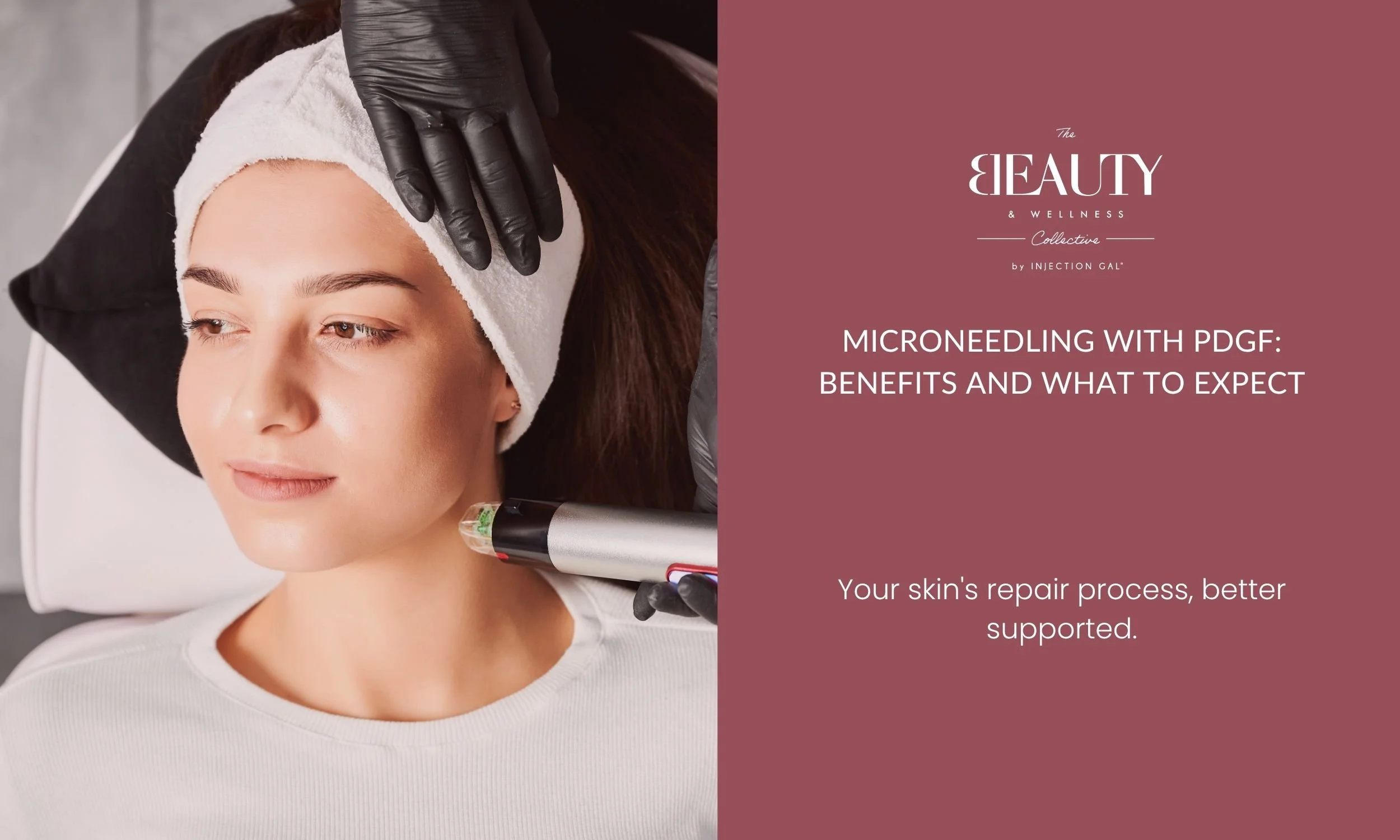
If you already know what microneedling can do for your skin, you may have noticed a growing list of add-ons that promise to take results even further. PRP, PRF, growth-factor serums, and PDGF (like our Ariessence® offering) all show up in the same conversation, and it's fair to wonder if any of them are an upgrade worth choosing.
Microneedling with PDGF pairs a standard microneedling treatment with a topical platelet-derived growth factor serum applied afterward. PDGF is a signaling protein your body already uses during repair, and early clinical research suggests that applying a topical PDGF serum after microneedling may support better skin-quality outcomes than microneedling alone.
In this article, we break down what the treatment involves, what the research shows so far, and what to expect before, during, and after your appointment.
What is Microneedling With PDGF?
Microneedling with PDGF combines two separate steps: a microneedling treatment that creates controlled micro-injuries in the skin, followed by a topical PDGF serum applied to support the skin's healing process.
Here's how the two pieces fit together:
The Microneedling Component
Microneedling uses fine needles to create tiny, controlled punctures across the treatment area. This prompts your skin to respond the way it would to any minor injury, by ramping up repair activity in the layers below the surface. Certain microneedling devices have been cleared by the FDA for specific aesthetic uses, including improving the appearance of facial wrinkles and acne scars.
The Topical PDGF Component
Once microneedling is complete, we apply a PDGF serum topically to the treated skin. PDGF stands for platelet-derived growth factor, a protein your body naturally produces to help coordinate tissue repair. Applied this way, PDGF is meant to complement your skin's post-treatment recovery, not replace the microneedling procedure itself.
Recombinant Growth Factor Technology
The PDGF used in this treatment is recombinant, meaning it's produced through controlled biotechnology rather than drawn from your own blood. This differs from options like PRP or PRF, which require a blood draw and processing before use. A recombinant formula contains no human-derived tissue or cells, which gives every treatment a consistent, standardized starting point.
How Does PDGF Support Skin After Microneedling?
PDGF works as a signaling protein, meaning it communicates with skin cells rather than acting as a filler or adding volume on its own.
That signaling role connects directly to what microneedling already sets in motion. Here’s how that happens:
Cellular Signaling
Growth factors like PDGF play a part in how cells communicate during tissue repair. Applying PDGF topically after microneedling is intended to support that natural signaling process while your skin is already primed to respond.
Skin Remodeling and Post-Procedure Support
Microneedling kicks off a remodeling process that continues well past your appointment. A 2025 randomized controlled trial found that patients who received topical recombinant PDGF after radiofrequency microneedling showed better facial skin-quality outcomes at 30 days compared with patients who received standard post-procedure care alone. The goal of the PDGF step is to support that remodeling window, not to force a specific result.
What Are the Benefits of PDGF in Microneedling?
The main appeal of adding PDGF is the potential for a more noticeable improvement in overall skin quality compared with microneedling by itself.
Improved Overall Skin Quality
In the same 2025 trial, investigators rated skin quality significantly higher in patients who received topical PDGF after RF microneedling. Improvements tend to develop gradually rather than overnight, showing up as smoother texture and a healthier-looking complexion over time.
Support for Fine Lines and Texture
Microneedling is already used to soften the appearance of fine lines and improve textural concerns like acne scars. Adding a PDGF serum is meant to complement that remodeling process, though it shouldn't be expected to erase lines or scars on its own.
Post-Treatment Recovery Support
Early research and manufacturer data point to an improved post-procedure experience for some patients. That said, recovery still varies by person, and PDGF shouldn't be treated as a guarantee of less downtime.
Consistent, Ready-to-Use Formulation
Because the PDGF serum is manufactured rather than drawn from your blood, there's no blood draw or processing step involved. You get the same standardized formulation at every visit, which takes some of the variability out of the treatment.
What Happens During Microneedling With PDGF?
A typical appointment follows a straightforward sequence, starting with skin preparation and ending with the topical PDGF application.
Here's what that sequence looks like in practice:
Skin Preparation and Numbing
We'll assess and cleanse your skin before treatment, and a topical anesthetic may be applied to help minimize discomfort during the procedure.
The Microneedling Treatment
During microneedling, you may feel light pressure, a slight vibration, or mild prickling as the device passes over your skin. Sensations vary depending on the treatment area and your personal comfort level.
Topical PDGF Application
After microneedling, we apply the PDGF serum topically to the treated skin as part of your post-procedure care. It's applied to the surface rather than injected or driven deeper through the microneedling device.
How Long Does Recovery Take After PDGF-Infused Microneedling?
Recovery after microneedling typically involves some temporary redness that can resemble a mild sunburn, along with a handful of other short-term effects.
Common effects during the first few days can include:
Tightness or mild swelling in the treated area
Dryness or slight peeling as new skin surfaces
Tenderness when touching the area
Redness that gradually fades over several days
How quickly this settles depends on your skin's sensitivity, the treatment area, and the intensity of your session. Some patients look presentable within a day or two, while others stay visibly pink a bit longer.
When to Contact Your Provider
Reach out if you notice significant swelling, increasing pain, spreading redness, drainage, or any other sign that something isn't healing as expected.
When Will You See Results From Microneedling and PDGF?
Early changes, like a brighter, smoother-looking complexion, can appear within the first week as initial irritation calms down.
Deeper textural improvements take longer, since they depend on the remodeling process microneedling sets off under the surface. The 2025 trial referenced earlier found measurable improvement at both 7 and 30 days after treatment, with results continuing to develop beyond the one-month mark. How many sessions you'll need to reach your goals depends on the concern you're treating and how your skin responds.
How Does PDGF Compare With PRP or PRF for Microneedling?
The biggest practical difference between PDGF and PRP or PRF comes down to where the growth factors originate:
| Feature | Topical PDGF | PRP/PRF |
|---|---|---|
| Source | Recombinant, manufactured | Your own blood |
| Blood draw | Not required | Required |
| Preparation | Ready to use | Requires processing |
| Consistency | Standardized formulation | Varies by patient |
Both approaches have supporters, and neither one is a universal upgrade over the other. PRP and PRF have a longer track record in aesthetic treatments, while topical PDGF offers a consistent, ready-to-use alternative without a blood draw.
The right choice depends on your goals, your treatment history, and what your provider recommends.
Is Microneedling With PDGF FDA Approved?
The honest answer requires separating the device from the product.
Certain microneedling devices are FDA-cleared for specific aesthetic uses, but that clearance applies to the device itself, not to any topical product used alongside it.
A topical PDGF product like this is typically listed with the FDA as a cosmetic rather than approved as a drug, and manufacturers are usually explicit that it's intended for topical use only, not injection. The FDA has also stated that cleared microneedling devices aren't approved for delivering cosmetic or topical products into the skin. In practice, that means the PDGF serum is applied to the surface as a post-procedure step, and any claim of "FDA-approved PDGF microneedling" oversimplifies how these products and devices are regulated.
Who is a Good Candidate for Microneedling With PDGF?
Good candidates are generally adults interested in improving fine lines, acne-scar texture, uneven skin, or early signs of aging, and who want to add a topical growth-factor step to their microneedling treatment.
A consultation is especially important if you have any of the following:
Active acne or a skin infection
Open wounds in the treatment area
A history of abnormal scarring
A bleeding or clotting disorder, or you take blood-thinning medication
A weakened immune system
Recent isotretinoin use
Current pregnancy or breastfeeding
We'll review your skin and medical history during your consultation to confirm this treatment is a good fit before moving forward.
Book Your Microneedling With PDGF Consultation
Ready to find out if microneedling with PDGF fits your skin goals? Schedule a consultation with The Beauty Collective, and we'll walk you through a treatment plan built around your skin.